



.svg)
.svg)


Timing: 6:00am-2:00pm
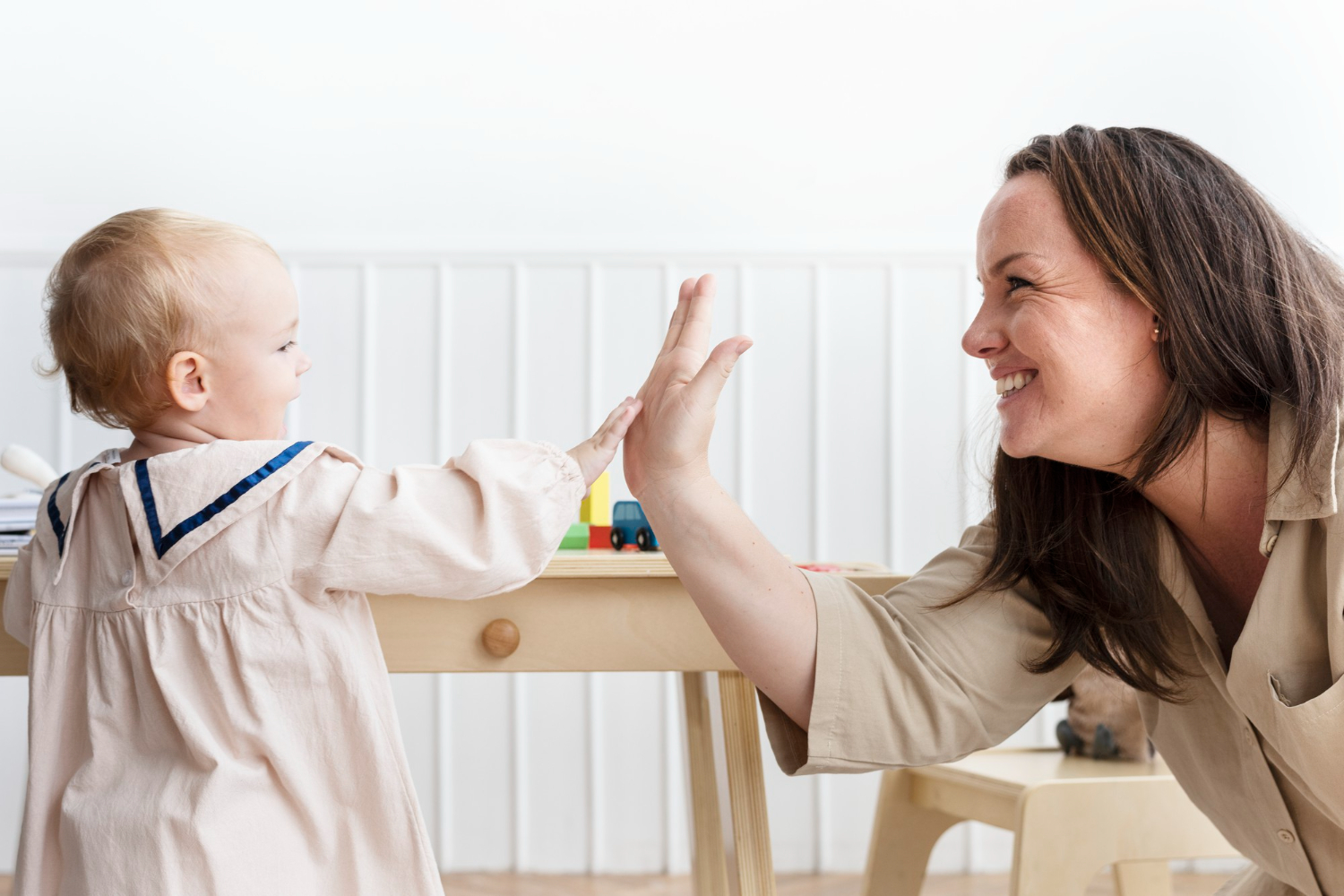
Early childhood education 🧠 Neurobiological foundations ✓ Development & support ✓ Language & motor skills ✓
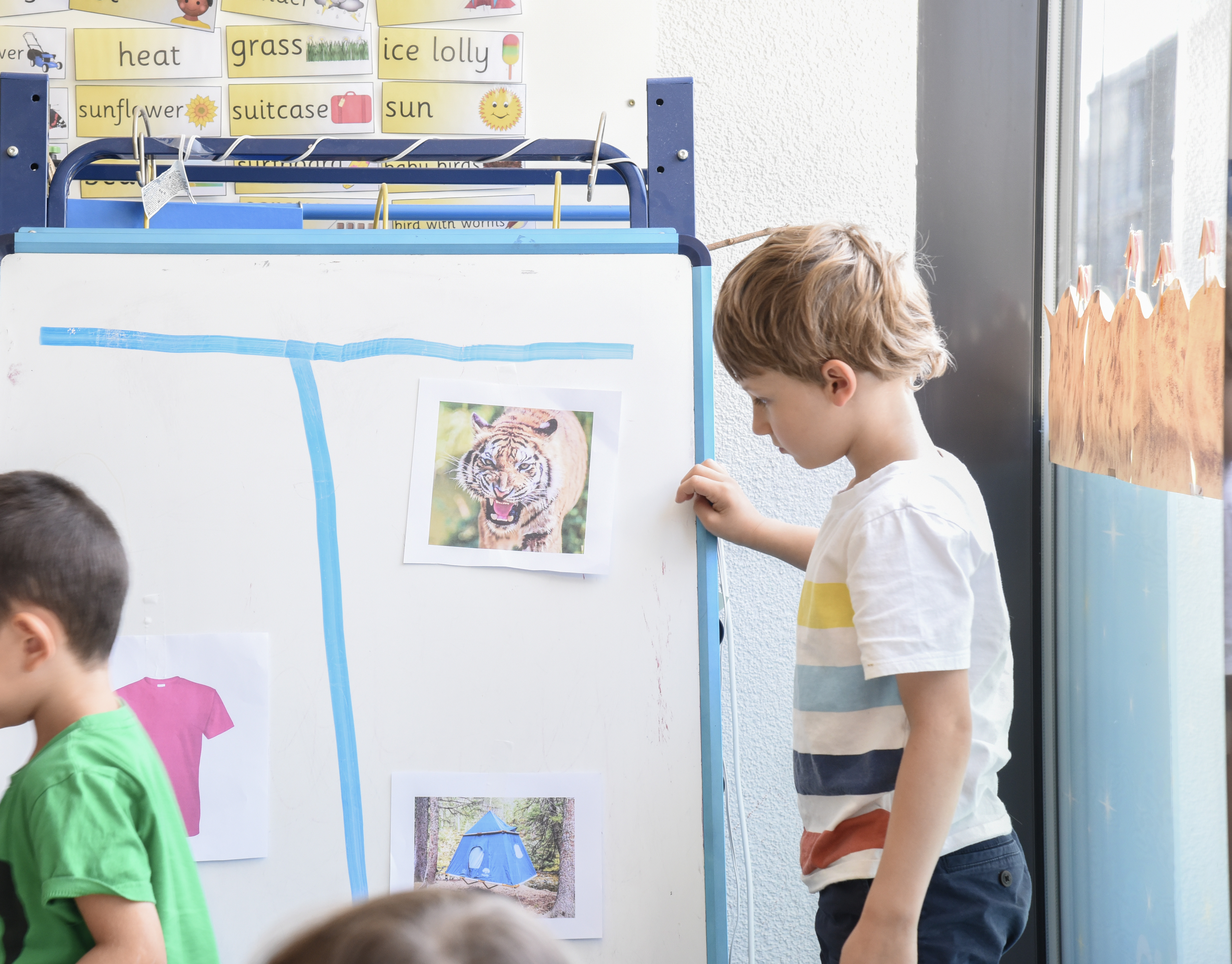
Entdecken Sie Little Star Day School

The first six years of a child's life are a period of breathtaking transformation and irreplaceable significance. At no other point in our lives do we learn as rapidly, as comprehensively, or as profoundly as during this phase. Within just a few years, a newborn becomes a complex individual who speaks, thinks, feels, plans, and forms social relationships. This understanding has driven a fundamental shift in modern pedagogy and developmental psychology: we no longer speak merely of "childcare," but of early childhood education.
At first glance, this term might seem academic or even performance-driven. Yet it means precisely the opposite of classroom-style drilling. Early childhood education is the art of recognising a child's natural developmental potential and providing the environment they need to flourish. It encompasses emotional and social development, discovering the world through all the senses, and acquiring those foundational skills that have become indispensable in an increasingly complex world.
Why is this topic more relevant today than ever before? The demands placed on the next generation continue to grow. Globalisation, digitalisation, and societal change call for abilities such as cognitive flexibility, emotional intelligence, and intercultural competence. At the same time, research consistently shows that social background and educational opportunity are closely intertwined. High-quality early childhood education is the most effective means of creating equal opportunities and giving every child—regardless of their background—the best possible start in life.
In this comprehensive guide, we shall delve deep into the subject. We explore the neurobiological marvels unfolding in your child's brain, unravel the secrets of language acquisition and bilingualism, and equip you with well-founded tools for recognising quality in educational settings. Our aim is to empower you as parents and interested readers to become true experts in your child's development.
To truly grasp the significance of early childhood education, we must look beneath the surface—directly into the child's brain. What we find there is nothing less than a highly dynamic process of neural development.
The human brain is far from complete at birth. Whilst a newborn already possesses nearly all the neurons (nerve cells) they will ever have—an estimated 100 billion—these cells are like isolated islands, with the bridges between them largely yet to be built.
During the first three years of life, a process known as synaptogenesis takes place. The brain forms connections (synapses) at a rate that is quite staggering: over one million new connections are created every second. Each sensory experience, each smile from a parent, each grasp for a toy sends electrical impulses firing through the brain, linking neurons together.
Studies of cortical neuron development reveal that the complexity of neural networks increases dramatically shortly after birth. Intriguingly, synaptic density reaches its peak not in adulthood, but in early childhood—around the age of two to three. At this point, a toddler's brain contains roughly 50% more synapses than an adult's. The brain is "hyper-connected" at this stage and extraordinarily receptive. It is, in effect, waiting to be shaped by experience.
Following this peak, an equally important process begins: pruning. The brain starts operating on the principle of "use it or lose it." Connections that are frequently used—through repeated interaction, affection, and stimulation, for example—are strengthened and wrapped in an insulating layer called myelin, which makes signal transmission up to 100 times faster. Connections that go unused, however, wither away. This is not a loss but a necessary specialisation that makes the brain more efficient.
Implications for Education:
These neurobiological facts underscore why the quality of a child's environment during the first years (0–6) is so crucial. What is missed during this phase in terms of stimulation can be difficult to recover later. An unstimulating environment physically results in less dense neural networks. Settings such as Little Star, which employ evidence-based programmes like the Early Years Curriculum (EYC®), aim precisely to make optimal use of these critical phases of brain development—without overwhelming the child.
Whilst sensory areas (vision, hearing) mature very early, the prefrontal cortex—the seat of personality, planning, and impulse control—develops more slowly but steadily throughout childhood.
Between the ages of three and six, this region undergoes a remarkable developmental leap. It is here that the so-called executive functions emerge. These include:
Research demonstrates that the development of these executive functions is a stronger predictor of later academic and professional success than IQ alone. Early childhood education must therefore create situations in which these functions can be exercised—through play, but consistently. This happens not through worksheets, but through role play, through following the rules of games, and through navigating social groups.
Another crucial neurobiological factor is the stress system. When a child feels afraid or insecure, their brain becomes flooded with cortisol. In high doses, cortisol is neurotoxic to the hippocampus—the region responsible for memory and learning.
Learning, then, is only possible when a child feels emotionally secure. This is where attachment theory comes into play. A high-quality nursery functions as a "safe haven." Only when the relationship with caregivers is stable and loving can a child switch into exploration mode. The emotional warmth enshrined in Little Star's ethos as a "home away from home" is therefore not sentimental rhetoric, but a neurobiological necessity for effective learning.
Having established how the brain learns, we must now clarify what should be learned and within what framework. The concept of early childhood education has undergone significant transformation and professionalisation in recent decades.
Traditionally, education was often understood as a process of filling an empty vessel: the adult possesses knowledge and pours it into the child. Modern early years pedagogy, informed by researchers such as Gerd E. Schäfer, understands education quite differently—as self-formation.
The child is not a passive receptacle but the active architect of their own reality. Children educate themselves by:
This shifts the role of the early years practitioner (and parents) from "teacher" to "facilitator" and "companion." The art lies in creating an environment that challenges the child without overwhelming them—what Vygotsky termed the "zone of proximal development."
Switzerland has recognised the critical importance of the early years and created a reference document to ensure quality: the Framework for Early Childhood Education, Care and Upbringing (Orientierungsrahmen für frühkindliche Bildung, Betreuung und Erziehung). Supported by organisations including the Swiss UNESCO Commission and the Swiss Childcare Network, this framework defines education as a holistic process.
It emphasises:
Cantonal sCantonal strategies, such as those developed by the Zurich Education Authority, build upon this foundation. They place particular emphasis on early language support and family assistance to ensure a smooth transition into kindergarten—which in Switzerland forms part of compulsory state education.trategies, such as those of the Zurich Directorate of Education, build on this and focus on early language promotion and family support in order to make the transition to kindergarten (which is part of elementary school in Switzerland) smooth.
Good nurseries do not operate on instinct alone—they follow well-founded pedagogical concepts. In practice, many settings adopt hybrid approaches that combine the best of different traditions.
"Help me to do it myself." This guiding principle from Maria Montessori is known the world over. Central to the approach is the prepared environment: materials are arranged so that the child can choose them independently. Each material serves a specific educational purpose (for example, sensory training or mathematics). The practitioner steps back and observes. This fosters autonomy and concentration.
This approach takes children's current life experiences as its starting point. Are the children fascinated by a building site outside? Then the building site becomes the project theme. It is highly relevant to everyday life and encourages engagement with the real world.
The Reggio Emilia approach places the image of the child as a competent, curious explorer at its heart. Learning emerges through projects, artistic expression, and investigative exploration of topics arising from the children's own interests. The environment is regarded as the "third teacher": spaces and materials are designed to invite active engagement, collaboration, and reflection.
The HighScope approach connects research and practice on the basis of developmental psychology theory, emphasising children's active participation in learning. It operates on a plan-do-review cycle: children plan, carry out, and reflect upon their activities, whilst practitioners guide each phase pedagogically. It is a structured yet child-centred approach with a strong empirical foundation.
Against this backdrop, integrative curricula are increasingly emerging—approaches that do not follow a single pedagogical tradition but systematically combine different concepts. The Early Years Curriculum (EYC®) developed by Little Star Day School is one such example.
The EYC® is not a rigid method but a structured framework that brings together various proven pedagogical principles and implements them in age-appropriate ways. These include:
The value of such a curated curriculum lies less in any individual method than in systematic quality assurance. It ensures that all key areas of learning are addressed and that support is not left to chance but delivered consciously, coherently, and in a developmentally appropriate manner—without sacrificing the playful character of early learning.
Early childhood education cannot be divided into school subjects. Nevertheless, categories—often called "learning domains"—help us observe development and provide targeted support. We now examine the four central pillars that feature in most educational frameworks, including the Swiss Lehrplan 21 and the Zurich Education Plan.
Cognition refers to the "tools of thinking." It encompasses memory, problem-solving, logic, and creativity.
For children, mathematics is not an abstract formula but lived experience.
Excellent nurseries nurture this through materials that invite counting and measuring, without it feeling like a lesson. The Montessori bead material is a classic example, transforming the abstract number "100" into a tangible quantity—a chain or a square.
Children are born researchers. The constant "Why?" is the engine of science. Cognitive education here means not simply answering these questions, but seeking answers together ("Why do you think the stone sinks and the wood floats? Let's find out!").
Table: Cognitive Milestones 0-6 Years
Language is the key to the world. It enables communication, regulates emotions, and structures thinking.
This term encompasses all the precursor skills for reading and writing. It does not mean drilling letters, but rather:
High-quality settings create a "literate environment": books are available everywhere, symbols label storage areas (a precursor to reading), and there is plenty of singing and rhyming.
Perhaps the most important domain for the twenty-first century. Specialist knowledge becomes outdated, but the ability to relate to others and regulate oneself endures.
Between the ages of three and five, children develop the remarkable ability to understand that other people have different thoughts, feelings, and intentions from their own. This forms the foundation of empathy.
Children must learn to cope with frustration. When the tower collapses, it is annoying. Resilience means not giving up, but rebuilding it—perhaps more sturdily this time. Practitioners support this through "scaffolding": rather than solving the problem for the child, they offer hints ("Perhaps you need wider blocks at the bottom?").
Settings such as Little Star place explicit emphasis on values like respect, motivation, and self-confidence. Within a group, children learn to negotiate conflicts ("We both want the spade—what shall we do?"). These social negotiation processes are demanding, but essential for learning to participate in a democratic society.
Movement is not merely physical exercise—it is cognitive work. Jean Piaget did not call the first developmental stage "sensorimotor" without good reason.
Mastering one's own body (running, jumping, balancing, climbing) gives children self-assurance. The connection between the two hemispheres of the brain (bilateral integration) through cross-lateral movements (such as crawling) is fundamental to later reading and writing processes.
Hand-eye coordination is demanding work for the brain. Threading beads, cutting, painting, moulding clay—all of this trains the muscles and the neurological control that will later be needed to hold a pencil.
In a globalised world, multilingualism is a decisive advantage. Yet the benefits do not begin only in working life—they shape the brain from early childhood.
For a long time, the misconception persisted that a bilingual upbringing would confuse children or delay language acquisition. Modern research has disproved this. On the contrary, bilingual children often show advantages in executive functions.
Why is this? A bilingual child must constantly—and unconsciously—decide which language is currently active and suppress the other (inhibitory control). This amounts to continuous "mental training."
Research show:s
How do children learn languages best? Not through formal instruction, but through interaction. The globally recognised method for this is immersion.
Settings such as Little Star Day School—which pioneered this principle in Switzerland as early as 2001—operate on the "one person–one language" approach. One key person speaks consistently in German, another consistently in English (or another target language).
The child learns language embedded in action:
Language is tied to a person and an emotional relationship. The child does not need to translate; they understand from context. In this way, they acquire the language intuitively, without an accent, and with correct grammar—much like their first mother tongue.
Language always carries culture with it. Bilingual nurseries often celebrate festivals from different cultural traditions (for example, Halloween alongside the Swiss Räbeliechtli lantern parade, or Chinese New Year where Mandarin is offered). This broadens children's horizons and fosters tolerance and global awareness—nurturing those "little citizens of the world."
Everything children acquire in the early years—language, self-regulation, social negotiation, and a love of learning—converges at one particularly significant moment: the transition to school. This step does not represent a break, but a shift in expectations. Learning continues to happen through play, yet now embedded in more structure, larger groups, and greater demands for independence.
This is precisely where the modern understanding of school readiness comes into focus.
School readiness does not mean that a child has already mastered the Year 1 curriculum. What matters is whether they possess those foundational competencies that enable them to learn confidently, curiously, and resiliently within the school system.
The Swiss Lehrplan 21 therefore describes school readiness not as a level of knowledge, but as a cluster of fundamental competencies:
These competencies do not operate in isolation—they are interwoven. A child may possess high cognitive potential, yet without self-regulation, language, or social confidence, these abilities often remain untapped in the school day. Early childhood education lays precisely this foundation: it creates the conditions not merely for learning to be possible, but for it to succeed.
In the final year before starting school, high-quality settings offer dedicated transition programmes—often called "Preschool," "Maxi-Club," or similar. During this phase, the pedagogical framework shifts noticeably: daily routines become clearer, tasks more complex, and periods of concentration longer. What matters is not proximity to school-style learning, but alignment with the child's development.
The Early Years Curriculum at Little Star Day School addresses precisely this. It intensifies areas such as Early Literacy and Early Mathematics—not as advance instruction, but as a deliberate deepening of those competencies children need for school-based learning: structuring language, recognising patterns, logical thinking, listening, asking questions, and persevering. Learning remains embedded in play, projects, and relationships—the playful character is not lost, but purposefully extended.
This phase is particularly effective because it allows children to try on a new role: I am no longer one of the youngest. They take on responsibility, experience themselves as capable, compare, explain, help others, and reflect on their own actions. From precisely this emerges self-efficacy—and with it, the inner confidence that carries them through the start of school.
The aim of this preparation is not a head start in knowledge, but a successful transition. When a child enters school with curiosity, self-confidence, and the feeling "I can do this," the crucial foundations are in place—regardless of whether they already know their letters or can count to twenty.
Early childhood education is a decisive investment in your child's future. It is not a luxury, but a necessity in today's knowledge-based society. The years from nought to six are magical, but also critical.
If you are facing the decision of which setting is right for your child, do not be guided solely by proximity to home. Look at the pedagogical quality. Seek out a place that sees your child as an individual, that ignites their curiosity, and that gives them the security they need to flourish.
We wish you and your child a wonderful journey through these formative early years. Cherish every developmental milestone—for they grow up so very quickly.
Andere Blog-Artikel

.svg)

.png)
.png)
Designed with 🩵 by EINSHOCH





.svg)