Children who are able to concentrate well have an easier time of it – when learning, playing, interacting with others, and later at school. The good news is that concentration is not an innate ability that you either have or you do not. It is a learnable skill – and with the right exercises, it can be developed in a targeted way from the very beginning.
This guide is aimed at parents, carers, and early years professionals who want to understand how children's attention works – and what they can do in practical terms to support children in developing it.
1. What Is Concentration in Children – and Why Does It Matter?
Concentration refers to the ability to direct one's attention towards a task or object over a period of time – whilst actively blocking out distractions. In developmental psychology, this is referred to as selective attention: the brain manages to focus on relevant stimuli whilst ignoring irrelevant ones.
In children, this mechanism is still developing. The prefrontal cortex – the part of the brain responsible for, amongst other things, concentration, impulse control, and planning – does not fully mature until early adulthood. This means that children are not unable to concentrate because they do not want to. Their brain is simply not yet fully developed.
🧠 The Science Behind It
According to findings from cognitive developmental psychology (including Diamond, 2013), the capacity for sustained attention in pre-school children manifests in short bursts of 2–5 minutes. From school entry age, this capacity increases to 10–20 minutes. With targeted practice, this timeframe can be extended considerably.
Why does this matter? Because the ability to concentrate is a key competency that influences all other learning processes. Children who are able to focus well learn languages more quickly, develop stronger social skills, and approach challenges with greater tolerance for frustration. In short, they are more resilient and better prepared for school in the long run.
2. From What Age Can Children Learn to Concentrate?
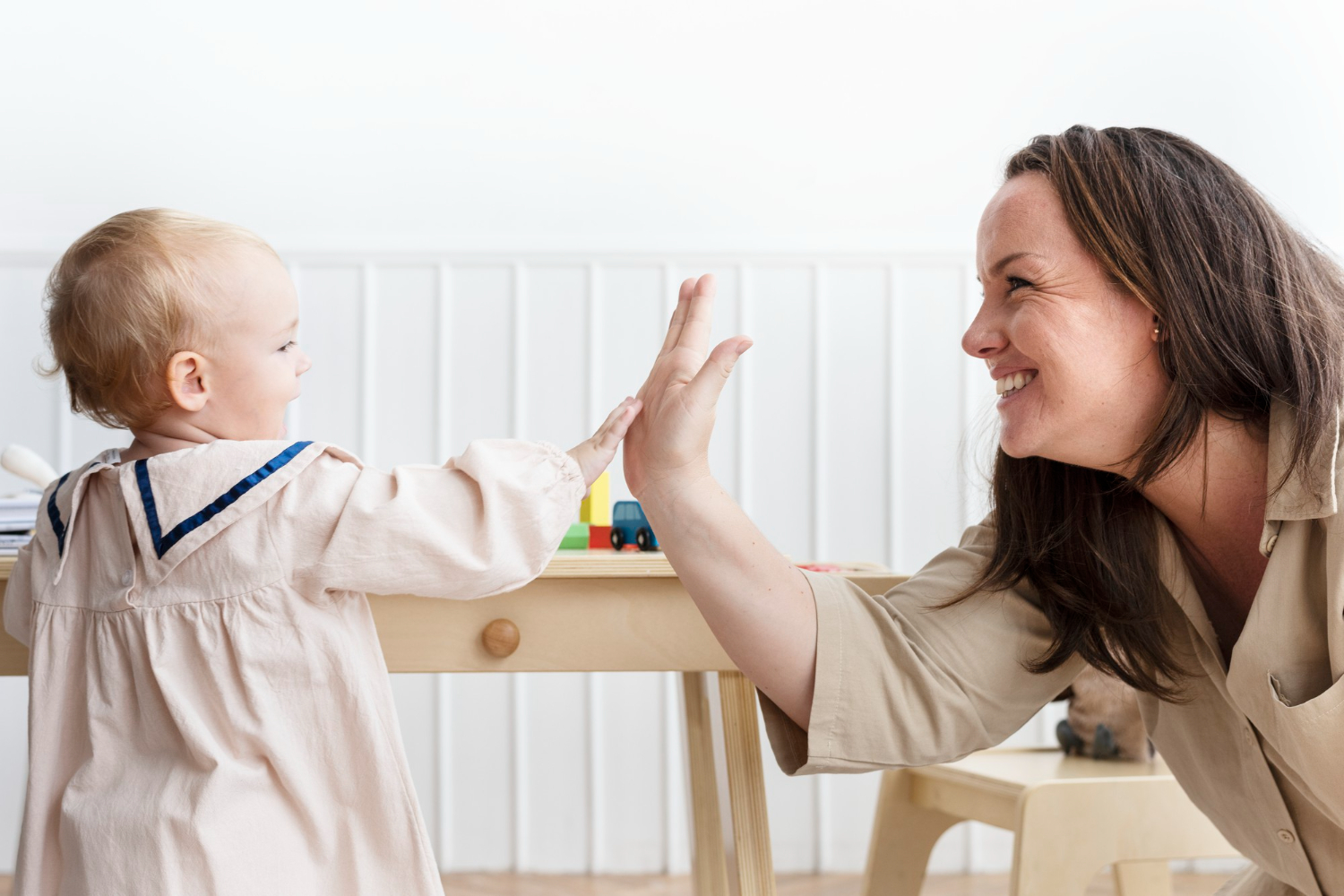
Concentration training begins earlier than most parents would expect. Even infants display early forms of selective attention when they track a face or a sound. From the second year of life, the first deliberate concentration exercises become possible.
Age |
Normal Concentration Span |
Suitable Exercise Types |
What to Bear in Mind |
0–12 months |
1–2 minutes |
Eye contact, locating sounds, grasping games |
Avoid sensory overload |
1–2 years |
2–5 minutes |
Simple sorting games, stacking, peekaboo |
Keep sessions short, prioritise free play |
2–3 years |
5–8 minutes |
Puzzles (3–6 pieces), looking at pictures, reading aloud |
No pressure, positive feedback |
3–4 years |
8–12 minutes |
Memory games, seek-and-find pictures, simple games with rules |
Keep rules simple to explain |
4–5 years |
10–15 minutes |
Audio stories, crafts, categorising activities |
Build in breaks |
5–6 years |
12–20 minutes |
Board games, handwriting practice, number games |
Use as preparation for school transition |
💡 Tip for Parents
Use this rule of thumb as your guide: child's age × 2–3 minutes = maximum concentration span. A three-year-old can realistically stay focused for 6–9 minutes. Plan exercises to be correspondingly short – and finish before the child becomes tired.
3. Why Do Some Children Struggle to Concentrate?
Mangelnde Konzentration bei Kindern hat selten eine einzige Ursache. Meistens spielen mehrere Faktoren zusammen. Bevor Sie mit gezielten Übungen beginnen, lohnt sich ein genauer Blick auf mögliche Hintergründe.
Poor concentration in children rarely has a single cause. In most cases, several factors are at play. Before beginning targeted exercises, it is worth taking a closer look at the possible underlying reasons.
Common Causes of Poor Concentration in Children
- Lack of sleep: Pre-school children need 10–13 hours of sleep per night. Even a deficit of one hour measurably impairs attention and impulse control.
- Sensory overload: Too many simultaneous sensory impressions – loud noises, large crowds, flickering screens – overwhelm the child's nervous system.
- Insufficient physical activity: Physical activity is directly linked to the ability to concentrate. Children who move too little find it harder to focus.
- Stress or emotional strain: Family conflict, separation anxiety, or feeling overwhelmed in a childcare setting all consume cognitive capacity.
- Nutrition: Too much sugar, too little omega-3, or an iron deficiency can directly affect concentration.
- Neurological factors (e.g. ADHD): Where difficulties persist, a paediatric assessment should be sought. ADHD affects an estimated 5% of all children.
⚠️ When to See a Paediatrician
If your child shows significant concentration difficulties over a period of several months – considerably more than would be expected for their age – despite a structured daily routine, sufficient sleep, and regular physical activity, you should consider seeking a paediatric or child psychology assessment. An early diagnosis enables targeted support to be put in place before frustration with school sets in.
4. Concentration Exercises by Age: What Really Works
The most effective concentration exercises for children are not dry academic tasks – they are designed so that children experience them as play. Age-appropriate dosing is key: too easy causes boredom, too difficult causes frustration.
Concentration Exercises for Children from Age 2
- Tower building: Who can build the tallest tower of blocks without it toppling? Trains fine motor skills, hand-eye coordination, and perseverance.
- What's missing? Place 3–4 objects on a tray. The child looks, then closes their eyes while one object is removed. What's gone?
- Guess the sound: Listen to everyday sounds (water, a door, clapping) and name them. Develops auditory attention.
- Drawing to instruction: "Draw a circle – now a red one." Simple, step-by-step instructions train the ability to follow directions.
Concentration Exercises for Children from Age 3
- Who am I? Simple guessing games with animals or objects (yes/no questions). Trains active listening and logical thinking.
- Blowing games: Moving cotton wool or table tennis balls by blowing. Breathing exercises calm the nervous system and strengthen self-regulation.
- Seek-and-find pictures (Where's Wally-style): A classic – and highly effective. Children search deliberately for specific figures within a complex scene.
- Chinese whispers: Passing whispered messages around a circle. Pure auditory concentration and patience.
- Colour hunt: The child moves through the house touching objects of a specific colour one by one. Can be developed into a competition.
Concentration Exercises for Children from Age 4
- Children's yoga: Simple poses (tree, downward dog) strengthen body awareness and balance – a direct precursor to mental concentration.
- Word families: "Name all the animals that can fly." The clock is ticking while the child lists them. Builds verbal fluency and cognitive stamina.
- Cooking from a simple recipe: Measuring, weighing, and mixing ingredients – real-life concentration with an immediately satisfying result.
- Letter hunt: Mark a specific letter throughout a newspaper or magazine. A visual scanning exercise.
Concentration Exercises for School-Age Children (6+)
- Ten breaths: Close your eyes, count ten slow breaths – a simple mindfulness exercise to do before studying.
- Fill-in-the-blank listening: Read a text aloud, leaving out one word – the child fills it in. Trains active listening.
- Dictation method: Write short sentences from dictation, then self-correct. Attention plus self-monitoring.
- Logic puzzles and strategy games: Simple strategy games develop forward-thinking and planning skills.
📊 How Much Daily Practice Is Enough?
Studies (including Rueda et al., 2005) show that as little as 10–15 minutes of targeted attention training per day over 4–8 weeks produces measurable improvements in concentration ability. That amounts to roughly one round of Memory, a reading session, or a puzzle together – no elaborate programme required, just consistent everyday family life.
5. Concentration Games for Children: Top 15
Games are the most natural training programme for the child's brain. The following 15 concentration games can be used at home, at nursery, or on the go – most require no additional materials.
# |
Game |
Age |
What It Trains |
Materials |
1 |
Memory |
from age 3 |
Visual memory, perseverance |
Memory cards |
2 |
Chinese Whispers |
from age 3 |
Auditory listening, patience |
None |
3 |
Seek-and-Find Picture |
from age 2 |
Visual scanning, perseverance |
Book or printed sheet |
4 |
Musical Chairs |
from age 3 |
Reaction speed, understanding rules |
Chairs, music |
5 |
Simon Says |
from age 3 |
Following instructions, impulse control |
None |
6 |
Puzzle |
from age 2 |
Spatial thinking, perseverance |
Puzzle (age-appropriate) |
7 |
Dominoes |
from age 3 |
Pattern recognition, patience |
Domino tiles |
8 |
What's Missing? (Tray Game) |
from age 2 |
Short-term memory, attention |
Everyday objects |
9 |
Categories Game |
from age 4 |
Cognitive flexibility |
None |
10 |
Audio Play / Audiobook |
from age 3 |
Auditory listening, imagination |
Playback device |
11 |
String Games (Cat's Cradle) |
from age 4 |
Fine motor skills, patience |
Wool or string |
12 |
Maze Worksheets |
from age 3 |
Visuomotor coordination |
Printed sheets, pencil |
13 |
Spot the Difference |
from age 4 |
Visual attention to detail |
Puzzle sheets |
14 |
Balancing Exercises |
from age 2 |
Physical concentration, body awareness |
Line of tape on the floor |
15 |
Building Challenge |
from age 2 |
Planning, following instructions |
Lego/building blocks |
6. Supporting Concentration in Everyday Life: Routines and Environment
Individual exercises are valuable – but the greatest effect comes from shaping daily life in a way that fosters concentration. Children do not learn to focus from a textbook, but through lived structure, reliable routines, and an environment that allows for calm.
Optimising the Home Environment for Concentration
- Create a quiet zone: A dedicated space free from screens and noise where the child can play or learn without interruption.
- Tidy does not mean bare: A low-stimulation environment is not an empty one – it is an organised one. Children need accessible materials, but not an overflowing toy box.
- Regulate screen time: Fast-paced, passive screen consumption (reels, short videos) demonstrably reduces the capacity for sustained concentration. The World Health Organisation recommends no screen time for children under 2, and a maximum of one hour per day for children aged 2–5.
- Consistent sleep times: A regular sleep-wake rhythm is the single most important measure for good concentration.
Rituals as Concentration Anchors
Rituals signal to the brain: "Now it is time to focus." Establish simple transition rituals before concentration tasks:
- Three slow, deep breaths in and out
- A glass of water
- A brief stretch or a few jumps (to release residual energy)
- A tidying ritual: clear the table before the task begins
💡 Practical Tip: The Pomodoro Method for Children
Adapt the Pomodoro technique for children: 5–10 minutes of focused activity, followed by a 2–3 minute free movement break. Use a visual sand timer – children can see the time passing and develop a feel for duration. This strengthens not only concentration, but also time management.
7. Supporting Concentration in Crèches and Nurseries
Children today spend a large part of their waking hours in early childhood education settings. What happens daily at crèche and nursery is therefore just as important for concentration development as what happens at home.
High-quality nurseries do not integrate concentration support as an isolated programme, but weave it as a continuous thread throughout the entire daily routine. This means clear structures, recurring rituals, a well-balanced mix of free play and guided activities, and a spatial layout that enables focused play.
What a Good Nursery Does for Concentration Development
- A structured daily routine with reliable transitions
- Small-group activities in which every child is actively involved
- Regular movement breaks as concentration resets
- Reading rituals that train auditory listening
- Forest days or nature-based education: nature demonstrably reduces stress hormones and increases attentional capacity (Kaplan, 1995)
- Individual observation and documentation of developmental progress
ℹ️ A Note on Choosing a Nursery
The quality of an early childhood education setting has demonstrably long-term effects on your child's cognitive development. When choosing a nursery, look closely at the staff-to-child ratio (how many children per member of staff?), a documented pedagogical concept, the daily routine, and the quality of the learning environment. Settings with a purpose-built early learning curriculum – such as those based on evidence-informed approaches like Montessori or early literacy programmes – provide children with a particularly strong foundation.
8. Nutrition and Concentration: What Children Really Need
The brain is a hungry organ – and this is especially true for children. The right nutrition is not a minor consideration when it comes to concentration: it is one of the most effective and frequently underestimated levers available.
Nutrient |
Effect on Concentration |
Good Sources for Children |
Omega-3 fatty acids |
Support nerve cell development, improve attention |
Salmon, walnuts, linseed oil, chia seeds |
Iron |
Oxygen transport to the brain; iron deficiency directly impairs concentration |
Pulses, red meat, oats |
Zinc |
Important for neurotransmitter synthesis |
Pumpkin seeds, cheese, pulses |
Complex carbohydrates |
Stable blood sugar levels, steady energy supply |
Oats, wholemeal bread, potatoes |
Water |
Dehydration of just 2% measurably reduces cognitive performance |
Water, unsweetened herbal teas |
Vitamins B6 & B12 |
Important for nerve function and memory performance |
Pulses, eggs, dairy products, fish |
⚠️ Concentration Robbers on the Plate
Simple sugars (sweets, sweetened fruit juice, processed foods) cause short-term energy spikes followed by a drop in blood sugar – with a noticeable dip in concentration. Artificial colourings (e.g. tartrazine, azorubine) are suspected of increasing the risk of hyperactivity. An unprocessed, varied diet is the best foundation.
9. Common Mistakes Parents Make When Supporting Concentration
Good intentions do not always lead to good outcomes. These five mistakes are ones that early years professionals encounter regularly – and all of them are easy to avoid.
- Forcing sessions to go on too long. Pushing a child to continue an activity they have already outgrown is counterproductive. Shorter and more frequent is always better than one session that goes on too long.
- Confusing concentration with intelligence. A child who sits with a puzzle for a long time is not "cleverer" – they may simply have a different learning style. Concentration is a skill, not a personality trait.
- Using praise incorrectly. "You're so clever!" is less helpful than "You kept going for so long – that was brilliant." Process praise builds perseverance. Outcome praise breeds fear of failure.
- Underestimating free play. Unstructured play – alone or with peers, without adult direction – is one of the most effective concentration exercises there is. The child decides for themselves and keeps themselves on track.
- Comparing with other children. Every child develops their concentration ability at their own pace. Comparisons are demotivating and create stress – the worst enemy of focus.
💡 The Most Important Thing for Lasting Concentration Development
Consistency beats intensity. Ten minutes a day over several months is more effective than one intensive practice week. The brain needs repetition – and enjoyment. If a child does not enjoy an activity, that is not a failure: simply switch to a different exercise.
10. Case Studies from Practice
📋 Case Study 1: Lena, aged 3
Situation: Lena finds it difficult to stay engaged in group activities at nursery for more than 3 minutes. She frequently wanders off, occupies herself briefly with something else, and then returns.
Analysis: Lena's behaviour is entirely normal for her age – at around 3 years, the concentration span for individualised, interest-led activities is approximately 6–9 minutes. In group activities, it is lower. The issue lies not with Lena, but with the way the group activity is structured.
Measures taken: The nursery practitioner shortens group sessions to 5 minutes, incorporates brief movement breaks, and gives Lena a small role within the activity (e.g. handing out materials). After 6 weeks, Lena is able to stay engaged for twice as long.
Outcome: Concentration span increased from approx. 3 to approx. 7 minutes. Key factors: a sense of purpose + movement + age-appropriate duration.
📋 Case Study 2: Ben, aged 5
Situation: Ben can barely occupy himself with an activity at home for 5 minutes, even though his nursery describes him as having good staying power. His parents report heavy screen use (approximately 2–3 hours per day).
Analysis: Fast-paced media consumption lowers the stimulation threshold. At home, Ben needs higher levels of stimulation to feel engaged – which makes real-world activities seem dull by comparison.
Measures taken: Screen time gradually reduced to 45 minutes per day. In its place: 10 minutes of an audiobook before bed introduced as a daily ritual, plus an afternoon puzzle. After 8 weeks, Ben voluntarily occupies himself with independent play for 15–20 minutes.
Outcome: Reducing screen time was the single most important measure. No external programme, no therapy – just a restructuring of everyday routines.
11. Frequently Asked Questions about Concentration Exercises for Children
How long should a concentration exercise last for a 4-year-old?
For children aged 4, the optimal exercise duration is 8–12 minutes. The rule of thumb "age × 2–3 minutes" provides a reliable guide. Importantly: end the exercise before the child becomes restless – finishing on a positive note does more for motivation in the next session than pushing through to exhaustion.
From what age should I actively help my child with concentration?
Structured concentration support makes sense from the second year of life – but exclusively through play. No child needs formal exercises. Reading aloud, puzzles, movement games: that is entirely sufficient. Targeted training in response to noticeable difficulties only becomes meaningful from kindergarten age onwards.
Does music help children concentrate?
It depends on the music. Calm, slow instrumental music (classical, jazz without vocals, nature sounds) can support concentration. Fast or loud music with lyrics, on the other hand, is distracting. The so-called "Mozart effect" is not conclusively supported by research – music is no miracle cure, but it can be a helpful backdrop.
My child has ADHD – are these exercises still useful?
Yes, many of the exercises mentioned are helpful for children with ADHD too – particularly the integration of movement, short sessions, clear structures, and routines. They do not, however, replace professional support. Where ADHD has been diagnosed, parents should work closely with their paediatrician, child psychologist, and school. Occupational therapy and cognitive behavioural therapy have demonstrated effectiveness.
Can concentration exercises cause harm?
Playful, age-appropriate exercises are entirely unproblematic. Difficulties arise when children are subjected to sessions that are too long, too difficult, or forced – this creates frustration and negative associations with learning itself. The principle always applies: the child sets the pace.
What role does bilingualism play in concentration?
Research shows that children growing up bilingually tend to develop stronger executive functions – and this includes the ability to concentrate. The constant switching between two language systems trains the brain in focusing and filtering information. Bilingual early learning can therefore act as a natural form of concentration training.
12. Conclusion: Concentration Is Not a Talent – It Is a Matter of Practice
Children who are able to concentrate well have an easier time of it – at school, in social life, and in their personal development. But concentration does not simply appear from nowhere. It grows through daily practice, a supportive environment, the right nutrition, and adults who are patient and know what they are doing.
The key insights from this guide at a glance:
- Concentration spans are age-dependent – and that is entirely normal.
- Playful exercises of 10–15 minutes per day are sufficient to achieve measurable progress.
- Sleep, movement, and nutrition are the foundation – without them, no exercises will help.
- Free play is underestimated: it is concentration development in its purest form.
- The environment matters: low-stimulation, structured spaces help the brain.
- Nurseries and early learning settings play a key role – choose thoughtfully.
ℹ️ Early Learning as a Foundation
Settings that – like Little Star Day School in Zurich and Zug – follow a scientifically grounded early learning curriculum and take a holistic approach to concentration, language development, and social skills from the very start give children a demonstrable head start. If you are looking for a nursery, it is worth asking: how structured is the daily routine? How individualised is the support? And is concentration understood as an integral part of everyday practice – not as an add-on?
Quellenverzeichnis
- Diamond, A. (2013): Executive Functions. Annual Review of Psychology, 64, 135–168.
- Rueda, M.R., Posner, M.I. & Rothbart, M.K. (2005): The development of executive attention: Contribution to the emergence of self-regulation. Developmental Neuropsychology, 28(2), 573–594.
- Kaplan, R. & Kaplan, S. (1989): The Experience of Nature: A Psychological Perspective. Cambridge University Press, New York.
- World Health Organization (2019): Guidelines on Physical Activity, Sedentary Behaviour and Sleep for Children under 5 Years of Age. WHO, Genf. https://www.who.int/publications/i/item/9789241550536
- Bialystok, E. (2011): Reshaping the mind: The benefits of bilingualism. Canadian Journal of Experimental Psychology, 65(4), 229–235.
- Molteni, R. et al. (2002): A high-fat, refined sugar diet reduces hippocampal brain-derived neurotrophic factor, neuronal plasticity, and learning. Neuroscience, 112(4), 803–814.
- American Academy of Pediatrics (2016): Media and Young Minds. Pediatrics, 138(5). https://publications.aap.org/pediatrics/article/138/5/e20162591/60503
- Montessori, M. (1949): The Absorbent Mind. Theosophical Press, Chicago.




.svg)
.svg)




.svg)

.png)
.png)





.svg)