



.svg)
.svg)


Timing: 6:00am-2:00pm
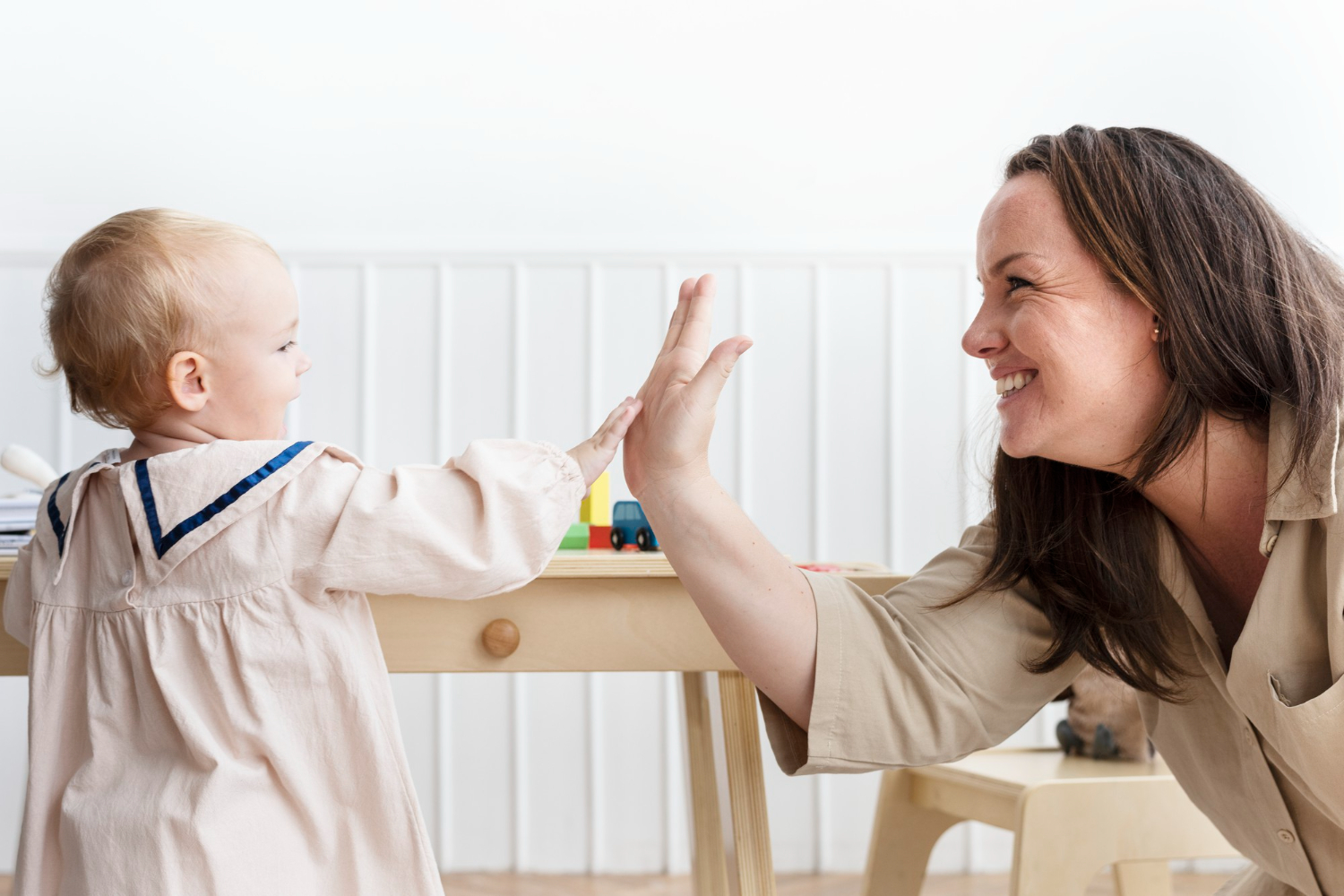
Having a baby in Switzerland 👶 Everything you need to know ✓ Pregnancy, birth & costs ✓ Checklist ✓

Entdecken Sie Little Star Day School

The pregnancy test is positive – or you are planning to have a child in the next few years and, at the same time, a job move to Switzerland is on the cards. Either way, the same question soon arises: how does it actually work when you are having a baby in Switzerland – medically, financially and administratively? For newcomers, a second layer often comes on top, one that nobody back home explained: will my child automatically be Swiss? Does a newborn really already need its own residence permit? And what happens if the birth falls right in the middle of those first uncertain months in a new country?
The good news first: the Swiss system is exceptionally well organised for expectant and young families – medically of a high standard, broadly protected financially through basic insurance, and administratively equipped with clear, short deadlines. The catch lies not in complexity but in timing: those who know the deadlines and get the order right come through pregnancy, birth and the first months with ease. Those who miss them end up out of pocket – in the worst case twice over, with the health insurer and with maternity leave. This guide walks you chronologically through the entire journey: from antenatal care through the birth to your return to working life.
The most common mistake when having a baby in Switzerland is not that something gets overlooked – the authorities remind you of almost everything. The mistake is that things get done at the wrong time: the child's health insurance too late, the supplementary insurance taken out too late, the return to work planned too tightly. Six stages structure the whole journey, and each one has its own logic.
For newcomers, the journey often begins before the pregnancy itself, in a Phase 0: anyone who has only recently moved to Switzerland, or is planning to, should sort out their health insurance and – if desired – supplementary insurance before a pregnancy is even confirmed, because the two types of insurance have different deadlines and waiting periods. In parallel, it is already worth looking for a midwife or gynaecologist now, since good practices in cities such as Zurich or Zug are often booked up months in advance.
With the positive test, the first trimester (weeks 1–13 of pregnancy) begins: the first antenatal check-up usually takes place in the second or third month. Week 13 is not a mere formality but a financial turning point – from this point on, the deductible and co-payment fall away entirely for all maternity-related services, until eight weeks after the birth. In the second and third trimesters (weeks 13–40) come the further check-ups and the two ultrasound scans, along with practical decisions: the antenatal class, the choice of birth setting and – at work – statutory protection against dismissal. This applies throughout the pregnancy and until 16 weeks after the birth: during this time your employer generally may not give you notice, regardless of how long you have been employed.
With the birth, everything formally begins at once: the 14-week maternity leave and the three-day deadline for registering the birth at the civil registry office (Zivilstandsamt) – the latter is usually handled for you by the hospital in the case of a hospital birth. The following eight weeks, the postnatal period (Wochenbett), are legally protected as absolute recovery time: you are not permitted to work during this period, while a midwife looks after mother and baby through home visits, and in the background an AHV number, health insurance for the baby and family allowances all have to be applied for. The final stage, the return to everyday life from month three onwards, then brings the organisational decisions: the end of maternity leave, the still-outstanding paternity leave and – if both parents are working again – the search for suitable childcare, which, given the waiting lists, should often begin during the pregnancy.
For a quick overview, here is a summary once more before the following chapters go through each stage in detail:
Stage |
Timing |
Key tasks |
|---|---|---|
0. Preparation (especially for newcomers) |
Before moving / early in the pregnancy |
Sort out health insurance, find a gynaecologist or midwife, research where to give birth, consider supplementary insurance |
1. First trimester |
Weeks 1–13 |
First antenatal check-up; from week 13, no more deductible on maternity services |
2. Second & third trimester |
Weeks 13–40 |
Antenatal check-ups, ultrasound scans, antenatal class, choice of birth setting, protection against dismissal at work |
3. Birth |
Day 0 |
Delivery, start of maternity leave, registration of the birth at the civil registry office (within 3 days) |
4. Postnatal period & first weeks |
Day 0–56 |
Midwife home visits; AHV number, health insurance for the baby and family allowances to be applied for |
5. Getting back to everyday life |
Month 3–6 |
End of maternity leave, take paternity leave, arrange childcare |
In brief
In a normal pregnancy, basic insurance (Grundversicherung) covers seven check-ups and two ultrasound scans – usually between weeks 11 and 14 and between weeks 20 and 23 of pregnancy. From week 13, the deductible and co-payment fall away entirely.
One feature that pleasantly surprises many newcomers: in Switzerland, midwives are legally on an equal footing with doctors. They can bill for the entire course of antenatal care, the birth and postnatal care independently through basic insurance – a freedom of choice that does not exist in this form in every country. Many women opt for a combined model: the first examinations with the gynaecologist, and antenatal care thereafter shared with, or provided entirely by, a midwife, provided the pregnancy is uncomplicated. Where there is an increased risk – for example with multiple births, pre-existing conditions or from a more advanced maternal age – ongoing specialist care remains sensible throughout.
The first routine examination usually takes place in the second or third month of pregnancy, after which the remaining six check-ups follow at intervals of roughly six weeks. In terms of content, they cover the same basic measurements each time: blood pressure, weight, a urine test to rule out protein or sugar in the urine, the baby's position and growth and – from the second half of pregnancy – the baby's heartbeat. In addition, one or two blood tests are part of the routine, among other things to check blood group, iron levels and immunity to certain infections, as well as a test for gestational diabetes between weeks 24 and 28.
The two ultrasound scans each serve their own purpose: the first, between weeks 11 and 14, determines the exact due date and measures nuchal translucency as part of first-trimester screening; the second, between weeks 20 and 23, is the anomaly scan, at which the baby's development is checked in detail. Further tests such as a non-invasive prenatal test (NIPT) are medically optional and are generally covered by basic insurance only where there is a corresponding indication, otherwise offered on a self-pay basis.
In addition, basic insurance contributes CHF 150 towards an antenatal class with a midwife – individually or in a group – or, alternatively, towards an advisory consultation about the birth, planning the postnatal period and breastfeeding. If you are looking for a midwife, do not put it off until the final weeks: as with paediatricians, experienced self-employed midwives in urban areas are often booked up months in advance – making early first contact, ideally still in the first trimester, the way to secure a place and continuity of care.
Good to know
Additional, medically unnecessary ultrasound scans – for example pure "baby-viewing" appointments with no clinical indication – are generally not covered by basic insurance. Some health insurers are more accommodating here; a quick call to your insurer will provide clarity before you book such an appointment.
Anyone moving here from a country with free family co-insurance stumbles at this point first: in Switzerland, every individual pays their own premium, regardless of age or income. For pregnancy and birth, however, a special rule applies that makes much of it simpler than it first sounds.
In concrete terms: all seven antenatal check-ups and the two ultrasound scans are fully covered from week 13 of pregnancy, with no deductible or co-payment – a detail that brings noticeable relief, especially when switching from a system with high out-of-pocket costs. For an antenatal class with a midwife, individually or in a group, basic insurance contributes a further CHF 150. For the birth itself, the location makes no difference to cost coverage, as long as the facility is on the hospital list of your canton of residence: hospital, an accredited birth centre and a planned home birth are all treated equally here.
The type of birth only makes a difference when it comes to the subsequent hospital stay – up to five days are provided for after a spontaneous birth, up to eight after a caesarean, because recovery after surgery naturally takes longer. Aftercare at home is generously provided for too: a self-employed midwife may bill for up to ten home visits within 56 days of the birth through basic insurance – or up to sixteen for first-time mothers, multiple births or after a caesarean.
For quick orientation, the following table summarises these services once more:
Service |
Coverage by basic insurance |
|---|---|
Antenatal check-ups & ultrasound |
Full; from week 13, no deductible/co-payment |
Antenatal class |
CHF 150 contribution |
Delivery (hospital, general ward, canton of residence) |
Full |
Delivery in a birth centre (on the cantonal hospital list) |
Full |
Planned home birth with a midwife |
Full |
Hospital stay, spontaneous birth |
Up to 5 days |
Hospital stay, caesarean |
Up to 8 days |
Midwife home visits in the postnatal period |
10 visits; up to 16 for first-time mothers, multiple births or a caesarean |
Medically necessary caesareans are covered in full. For an elective caesarean with no medical indication, the health insurers operate in a legal grey area – in practice, most cover the cost anyway, since proving the absence of necessity is laborious. If you want certainty, it is best to discuss this with your doctor early on.
Caution: waiting period for supplementary insurance
If you want a single or twin room in hospital, free choice of doctor or a birth in a private clinic, you need supplementary hospital insurance – and that comes with a waiting period of around one year from the start of the policy. If the pregnancy only becomes known after the policy has been taken out, the supplementary insurance usually does not pay retrospectively. So anyone wanting to keep these options open should take out the supplementary insurance before a pregnancy is confirmed – for newcomers, that means thinking ahead as early as your arrival in the country.
Switzerland gives you genuine freedom in choosing where to give birth – as long as you stay within your canton of residence. Each canton keeps a hospital list on which approved hospitals and birth centres are recorded; only facilities on this list are covered in full by basic insurance. Which of the three options suits you depends less on cost – all three are covered by basic insurance – than on your personal needs and how the pregnancy is progressing.
The hospital is the most common choice and the only option if a caesarean is planned, if there are risk factors or if you simply feel safer with anaesthesia and neonatology available in the same building. You give birth in the general ward in your canton of residence; a room or choice-of-doctor upgrade is only possible with supplementary insurance. Medical care is provided – as you prefer – by a midwife or doctor of your choice with hospital admitting rights, or by the hospital team.
The birth centre is aimed at women with an uncomplicated pregnancy who want as natural a birth as possible – without a clinical atmosphere, but with attached midwife care and the option of a water birth, aromatherapy or acupuncture for pain relief. Birth centres generally work closely with a nearby hospital, so that a transfer is possible quickly if needed. Here too, full cost coverage requires accreditation on the cantonal hospital list.
The home birth takes place in the familiar surroundings of your own home, accompanied by an experienced, self-employed midwife who stays present throughout the entire birth. It is suited above all to women who have already had a straightforward birth or who place particular value on self-determination and calm; at the first signs of complications, a transfer to hospital takes place. The midwife's services themselves are fully covered by basic insurance; for further costs – such as materials or equipment – some supplementary insurers pay a lump sum of up to CHF 2,000.
In summary:
Birth setting |
Features |
Cost coverage |
|---|---|---|
Hospital (general ward) |
Full medical care, caesarean possible, canton of residence applies |
Full, through basic insurance |
Birth centre |
Natural birth; water birth, aromatherapy, acupuncture possible |
Full, if on the cantonal hospital list |
Home birth |
Familiar surroundings, care from a self-employed midwife |
Full for midwife services; supplementary insurers sometimes pay a lump sum of up to CHF 2,000 for further costs |
Anyone who wishes to give birth outside their canton of residence – for example because a particular clinic has been recommended – can generally do so, but may have to bear part of the additional costs themselves, unless a corresponding supplementary insurance is in place. This does not apply to emergencies: a medically necessary transfer is always covered in full.
In brief
A spontaneous hospital birth costs roughly CHF 5,000 to 8,000 gross, a caesarean CHF 8,000 to 15,000. With existing Swiss basic insurance, the health insurer covers these costs in full, with no deductible or co-payment between week 13 of pregnancy and 8 weeks after the birth.
These figures are gross costs, as billed between the hospital and the health insurer – for you, as a correctly insured person in Switzerland, they generally result in no bill at all. In most hospitals, billing is based on a flat-rate case system: rather than every single service being charged separately, the entire treatment – from admission to discharge – is assigned to a case group according to the diagnosis and reimbursed at a flat rate. This also explains the range in costs: an uncomplicated hospital stay in a regional hospital works out differently from a birth with complications in a university central hospital, which maintains additional infrastructure such as a neonatal unit.
The picture is different if there is no valid Swiss basic insurance, for instance in the case of a very short-notice entry into the country without residence: then the full costs are billed privately, without the tariff protection that insured persons enjoy through basic insurance. International clinics with all-inclusive packages – a private room, free choice of doctor, elective caesarean, all-round care from a fixed team – charge correspondingly more, since here, alongside the medical service, comfort and exclusivity are priced in too.
Type of birth / situation |
Indicative gross cost |
|---|---|
Spontaneous hospital birth |
CHF 5,000–8,000 |
Caesarean (Sectio) |
CHF 8,000–15,000 |
Private VIP package without Swiss basic insurance |
CHF 36,000–47,000 |
One figure surprises many people further: in Swiss hospitals, on average around a third of all babies are born by caesarean – by way of comparison, in Finland it is 16%, in Turkey over 50%. Between individual Swiss hospitals, the caesarean rate varies between 19% and 59%, partly because central hospitals more often deal with high-risk pregnancies than smaller ones do. This is no cause for concern, but a good reason, when choosing where to give birth, also to find out about the setting's birth philosophy and caesarean rate, for example via the publicly accessible hospital comparison portals.
For expat families who have just moved here, it is worth looking at the timing at this point: anyone moving to Switzerland must register with a health insurer for basic insurance within three months of arrival – cover then applies retrospectively from the date of entry, much as later with the registration of the baby. If this deadline is missed, retrospective premium demands loom and, in the worst case, a gap in cover during the very time of the pregnancy. So anyone moving to Switzerland while pregnant should sort out their own health insurance not just shortly before the birth but immediately after arrival.
In brief
Statutory maternity leave in Switzerland lasts 14 weeks, or 98 days, and begins on the day of the birth. During this time, mothers in employment receive 80% of their average salary, but no more than CHF 220 per day.
A feature that makes Switzerland unique in a European comparison: there is no statutory antenatal leave. Maternity leave begins exactly on the day of the birth – not before. Many expectant mothers therefore get themselves signed off sick in the final weeks before the due date, provided there is a medical need.
Entitlement to maternity benefit (Mutterschaftsentschädigung, financed through the Loss of Earnings Compensation scheme, EO) applies to women who, at the time of the birth, have been continuously covered by the AHV over the preceding nine months and were in gainful employment for at least five of them. Part-time work does not rule out entitlement either – the benefit is then calculated in proportion to the level of employment. In the first eight weeks after the birth there is an absolute ban on working; in weeks nine to sixteen, the mother may work only with her express consent. Anyone who voluntarily resumes work before the 14 weeks are up loses their entitlement to the remaining benefit entirely and irrevocably.
Worked example: maternity benefit
Ms Berg earns CHF 6,500 gross per month before the birth.
Benefit: 80% of CHF 6,500 ≈ CHF 5,200 per month, paid for a maximum of 98 days.
Ms Keller earns CHF 9,000 gross per month – above the ceiling of CHF 8,250.
Benefit: capped at CHF 220 per day ≈ CHF 6,600 per month, even though 80% would work out higher.
Caution: extension if the newborn stays in hospital
If your child has to stay in hospital for longer than 14 days immediately after the birth, your entitlement to maternity benefit is automatically extended by the number of additional hospital days – by up to 56 further days. In extreme cases, this means up to 154 compensated days are possible. You do not have to apply for this arrangement separately, but you should be aware of it in case your child is born prematurely or with complications.
In an international comparison, Switzerland is at the lower end in terms of duration. The following table places the Swiss arrangement alongside four European countries with differing models:
Country |
Maternity leave |
Wage replacement |
Additional parental leave |
|---|---|---|---|
Switzerland |
14 weeks |
80%, max. CHF 220/day |
None (statutory) |
Germany |
14 weeks (maternity protection) |
100% |
Up to 3 years, of which max. 14 months of parental allowance |
France |
16 weeks (from the 3rd child: 26) |
100% (capped) |
Up to 3 years, compensated at a low flat rate |
Sweden |
Part of 480 days of shared parental leave |
80% of salary |
90 days reserved per parent |
United Kingdom |
52 weeks |
90% (6 weeks), then a flat rate |
– |
In brief
The second parent is entitled to two weeks of paid leave (14 daily allowances), which can be taken within six months of the birth either in one block or day by day. The benefit amounts to 80% of salary, up to CHF 220 per day, financed through the Loss of Earnings Compensation scheme.
Since 1 January 2021, fathers in employment have been entitled to two weeks of paid leave after the birth of their child. With the introduction of "marriage for all" in 2022, the entitlement was also broadened in wording as of 1 January 2024: in the legal text, "paternity leave" became "compensation for the other parent". This changes nothing about fathers' entitlement – but now the wife married to the mother receives the same entitlement too, provided the child was conceived by sperm donation in accordance with the Reproductive Medicine Act. The legal father is deemed to be whoever is married to the mother, has officially acknowledged the child or has been established as the father by a court; acknowledgement can also still take place within six months of the birth, in which case the entitlement applies retrospectively from the day of birth.
You are entitled to the benefit if you are in gainful employment at the time of the birth – as an employee or as a self-employed person – and were continuously covered by the AHV for the preceding nine months, at least five of them in employment. Anyone who is unemployed at the time of the birth, or unable to work owing to illness, accident or disability and therefore drawing daily allowances from a social or private insurer, is also entitled under these conditions. Relevant for newcomers: periods of employment and insurance in an EU or EFTA state are counted towards the nine months.
The two weeks correspond to 14 daily allowances and can be taken either in one block – including the weekend – or day by day across the whole six-month period; any unused days then lapse without replacement. The employer may neither reduce your ordinary holiday entitlement because of the leave nor refuse to let you take it. There is, however, no protection against dismissal here comparable to that during maternity leave: the employer may in principle give notice during this time. One exception applies if the employment relationship ends before the entire leave has been taken – in which case the notice period is extended by the number of leave days still outstanding. The entitlement is registered, as with maternity benefit, through the employer with the relevant AHV compensation office.
Worked example: compensation for the other parent
Mr Steiner earns CHF 7,000 gross per month before the birth.
Benefit: 80% of CHF 7,000 ≈ CHF 5,600 per month; for the two weeks (14 daily allowances) that works out at around CHF 2,800.
Mr Meier earns CHF 9,500 gross per month – above the ceiling of CHF 8,250.
Benefit: capped at CHF 220 per day, which for 14 daily allowances is a maximum of CHF 3,080 – regardless of what 80% of his actual salary would work out at.
Good to know: political developments
A federal popular initiative (the "Family Time Initiative") is currently under way, calling for paid parental leave of 18 weeks per parent. Signatures are being collected until 1 October 2026; should the initiative go through and be accepted, implementation would have to follow within five years. In parallel, a more moderate counter-proposal is also being discussed in parliament. Until one of these proposals actually comes into force, the current arrangement of 14 weeks' maternity and 2 weeks' paternity leave applies unchanged. Anyone planning now should rely on the current legal position and keep an eye on further political developments.
In brief
Every birth in Switzerland must be registered within three days at the civil registry office (Zivilstandsamt) of the place of birth. In the case of a hospital birth, the hospital administration usually handles the registration. The birth certificate costs CHF 30 plus postage.
In the first few days after the birth, you want one thing above all: to get to know your child. A few administrative steps, however, run in parallel and partly automatically. In the case of a birth in a hospital or birth centre, the facility usually handles the registration with the civil registry office; even so, bring the passport or identity card of both parents as well as – if you have them – the family record book (Familienbüchlein) and marriage certificate to the hospital. If the parents are not married to each other, the father must acknowledge the child at the civil registry office, either before or immediately after the birth.
Where parents are married and share a common family name, the child automatically receives that name. If the spouses do not share a common name, they decide at the latest when they marry which of their two names by birth their children are to bear; this decision applies to all their children together and can be changed once more within twelve months of the birth of the first child. If the parents are not married to each other but share parental responsibility, the child automatically receives the mother's name by birth – unless the parents expressly specify the father's name by birth when registering the birth. For internationally composed families, one point is particularly important: a double-barrelled surname for the child is not possible under current Swiss law, even if a double name would be customary in the home country. In March 2026, as part of a larger reform of naming law, parliament deliberately decided against double-barrelled names for children – from the reform's entry into force, at the earliest on 1 January 2027, married couples will once again be allowed to choose a double-barrelled name for themselves, but their children will still receive only a single surname. As the first name and surname must already be settled at the birth registration within three days, it is worth clarifying this point with the civil registry office during the pregnancy.
In brief
No. Unlike in the USA, for example, Switzerland applies the principle of descent, not place of birth. Your child receives Swiss citizenship only if the mother or father is already a Swiss citizen – regardless of whether the parents are married.
For expat families, this is often the biggest surprise of the whole chapter: a child born in Zurich, Zug or anywhere else in Switzerland to foreign parents remains, initially, foreign – it inherits the nationality of the parents (or of one parent), not the place of birth. Swiss citizenship can only be acquired later through a regular naturalisation, which usually requires the family to have been resident for several years.
Practical tip: don't forget your home country's citizenship
Check in parallel what your home country requires: some states recognise the citizenship of a child born abroad only if the birth is reported to the embassy or the home civil registry within a certain period. Enquire early – ideally during the pregnancy – with your embassy in Switzerland about which documents and deadlines apply for your country.
Yes – even a baby a few days old with foreign nationality needs its own residence permit. In practice this is a pure formality: as soon as the civil registry office has registered the birth, the municipality automatically forwards the information to the cantonal migration office, which issues the permit. As a rule, you do not have to apply for anything extra; the municipality lets you know as soon as the permit is ready for collection. Through the parents' employment, the employer also automatically registers the family with the AHV, so that your child too will in time receive its own AHV number – which later accompanies it through health insurance, family allowances and taxes.
In brief
You must register your newborn with a health insurer for the mandatory basic insurance no later than three months after the birth. Cover then applies retrospectively from the first day of life – regardless of the child's state of health.
Until discharge from hospital after a healthy birth, billing still goes through the mother's health insurer. After that, your child needs its own policy – and here one of the most generous rules of the whole system applies: every health insurer must accept every child into basic insurance unconditionally, with no health check and no waiting period. You are not tied to the parents' insurer but have a free choice among all approved insurers – so comparing premiums is worthwhile, independently of your own policy.
What the policy costs pleasantly surprises most people: in 2026, the average child premium in basic insurance is CHF 122.50 per month – considerably less than the CHF 465.30 that an adult pays on the Swiss average. The actual premium also depends strongly on the canton of residence and the chosen deductible and can therefore deviate noticeably up or down. Anyone who insures their child with the same insurer as themselves benefits, with some providers, from an additional family discount; some insurers even waive the premium entirely from the third child onwards. On a low or middle household income, it is also worth looking at the cantonal premium reduction (Prämienverbilligung): eligible families often pay only a small part of the premium for their minor children themselves, with the canton covering the rest. The exact income thresholds and reduction rates differ from canton to canton; an active application to the relevant cantonal office is required in every case, as it is not paid out automatically.
As with adults, there are voluntary supplementary insurances for children too, for example for dental treatment, alternative medicine or a single room in hospital. Here, however, a different standard applies than with basic insurance: supplementary insurers may assess the child's health and refuse acceptance or impose exclusions. Anyone considering supplementary insurance for their child should therefore make this decision, too, as early as possible in the first weeks of life – not only once health questions have already arisen.
Caution: a deductible of CHF 0 only with timely registration
For children under 18, a deductible of CHF 0 applies – the health insurer covers treatment costs from the very first franc. But if you register your child only after the three-month deadline, cover may, depending on the insurer, apply only from the registration date rather than retrospectively from birth. So it is best to register your baby within the first weeks of life, not only just before the deadline expires.
Family allowances (Familienzulagen) are a monthly supplement per child that cushions part of the ongoing costs. The Federal Family Allowances Act (FamZG) distinguishes three categories: the child allowance from birth to the 16th birthday, the education allowance for children in education or training between 16 and a maximum of 25, and, in some cantons, a one-off birth or adoption allowance. What determines the amount is not your place of residence but the canton in which the claiming parent works – where two working parents are in different cantons, the higher AHV-liable income from employment usually decides who has the primary claim.
The federal government prescribes only minimum amounts; the cantons may be more generous, and many are. In 2026, the federal minimum is CHF 215 for the child allowance and CHF 268 for the education allowance. At the top end, the canton of Zug pays the highest child allowance in Switzerland at CHF 330, followed by Valais and Vaud. In addition, several cantons – including Fribourg, Geneva, Jura, Lucerne, Neuchâtel, Uri, Vaud and Valais – grant a one-off birth allowance of roughly CHF 1,000 to 3,000 per child, provided it is born alive or after at least 23 weeks of pregnancy.
Canton (examples) |
Child allowance / month |
Education allowance / month |
|---|---|---|
Federal minimum (FamZG) |
CHF 215 |
CHF 268 |
Zurich |
CHF 215 (federal minimum) |
CHF 268 |
Bern |
CHF 230 |
CHF 290 |
Geneva |
approx. CHF 300 |
approx. CHF 400 |
Zug |
CHF 330 (highest child allowance in Switzerland) |
– |
One point that is easily overlooked: family allowances are not a tax-free top-up but count as taxable income and must be declared in your tax return – on the salary statement, they usually appear together with the salary or under fringe benefits. At least they are exempt from the deductions for AHV, IV, EO and unemployment insurance, so no social-security contributions are charged on them.
For families in a cross-border situation – for instance where one parent works in Switzerland while the family (still) lives in an EU or EFTA state – additional inter-state coordination rules apply. In principle, the family benefit is paid by the country in which a parent is in gainful employment; if both parents work in different states, priority usually goes to the country in which the child lives. If the Swiss allowance is higher than the foreign family benefit, the difference can be claimed in addition – this is often worthwhile, since Swiss child allowances in many cantons are higher than the child benefit of neighbouring countries. A residence certificate for the children is usually required for the application; anyone in such a situation is best advised to clarify responsibility early on with the compensation office of the Swiss employer.
Practical tip
Family allowances are not paid out automatically – you have to apply for them actively through your employer with the relevant family compensation office by reporting the birth. At least anything missed can be reclaimed for up to five years. Even so, submit the application as soon as possible after the birth, so that the allowance is paid with your salary from the very first month.
While still in the hospital or birth centre, two routine examinations take place that many parents only become consciously aware of afterwards: between the 48th and 72nd hour of life, a drop of blood is taken from your child's heel for the national newborn screening, with which rare congenital metabolic and hormonal disorders are detected early. In addition, a hearing screening is part of standard care, in order to identify any hearing impairment as early as possible. Both tests are covered by basic insurance and are offered routinely without separate consent.
After discharge, a self-employed midwife takes over postnatal care at home – usually ten home visits within 56 days, or up to sixteen after a caesarean, a premature birth, multiple births or for first-time mothers. In doing so, she checks not only the mother's recovery but also the child's weight development, the umbilical cord stump and possible newborn jaundice, supports breastfeeding or bottle-feeding and is often the first point of contact for any uncertainties in the first weeks. During this time, a good midwife also pays attention to the mother's own well-being: severe exhaustion, a persistently low mood or feeling overwhelmed in the postnatal period are not uncommon and no sign of failure – speak openly about it, and the midwife can refer you if needed to your GP, a gynaecologist or a mental health professional.
One service that many newly arrived parents are not even aware of: the free mother-and-father advisory service (Mütter- und Väterberatung) run by your municipality. It supports families until around five years after the birth – from questions about sleep, nutrition and development to simply finding your feet in a new environment – and is usually available without an appointment, by telephone or at a drop-in clinic. In parallel, it is worth looking early for a paediatrician for the child's check-ups: like good midwives, popular paediatric practices are often booked up months in advance.
With the end of maternity leave, the next question arises for most families: who looks after the child when both parents are working again? Switzerland essentially has three models for this. The day nursery (Kita) is the most widely used form of institutional care and takes in babies from three to six months, depending on the setting; every nursery needs a cantonal licence under the Foster Care Ordinance and must demonstrate qualified staff and an educational concept. The childminder (Tagesfamilie) looks after your child in a private household, likewise under cantonal supervision and with a limited number of children per carer. A nanny, finally, looks after the child in your own home; she is not subject to a cantonal licensing requirement but must be correctly registered as an employee (AHV, accident insurance, salary statement).
In terms of cost, Switzerland is among the most expensive countries in Europe: a full-time nursery place costs, on the national average, CHF 110 to 130 per day, which with four days of care per week quickly amounts to CHF 2,000 to over 3,000 per month – in large cities such as Zurich or Geneva, tending towards the upper end of this range. Most municipalities, however, offer income-related rates for subsidised places, at which the actual parental contribution is considerably lower depending on household income; in addition, childcare costs can be deducted from tax in most cantons and at federal level. At the end of 2025, parliament also passed the Federal Act on Support for Non-Parental Childcare (UKibeG), which for the first time provides for a permanent federal contribution for children up to the age of 8 – staggered by the amount of care, from CHF 100 per month for one day of care per week up to CHF 500 for full-time care. The act was formally adopted after the referendum deadline expired in the summer of 2026; however, according to industry associations, it is likely to take until towards the end of the decade before the cantons have adapted their legislation and the first contributions are actually paid out.
Given these costs and the often long waiting lists of six to eighteen months, it is usually worth starting the search for a childcare place during the pregnancy. Especially for families who have only just arrived in Switzerland, bilingual care with a clearly structured day – meals, consistent key carers, settling in at the child's own pace – can considerably ease the return to work. Providers such as the Little Star Day School in Zurich and Zug already care for babies from six months with a specially developed learning concept and support breastfeeding mothers in the transition back to work – you can find details on our nursery care page.
For expats having a baby in Switzerland – whether shortly after moving here or planned while still in the home country – it pays to tackle a few points considerably earlier than local guides aimed at long-established families would suggest. Four things can be prepared from a distance and later cost valuable time if left undone.
One point that easily gets lost in the first hectic days after the birth, but already becomes relevant at the birth registration within three days: foreign documents such as a marriage certificate issued abroad or your own birth certificate must be presented to the civil registry office in certified form – depending on the country of origin, with an apostille or consular legalisation, often additionally with an officially certified translation. You should organise these documents from your home country before the birth, since obtaining them at short notice under time pressure – from the postnatal period, say – is far more laborious than a calm order placed weeks in advance. In terms of language, you are usually in good hands in larger cities: in hospitals and birth centres in Zurich, Basel or Geneva, English is widely used as a means of communication, whereas at the mother-and-father advisory service or in more rural regions you should expect German, French or Italian – if in doubt, ask about an interpreting service as early as your first appointment.
Checklist: before the birth as an expat family
Case study: the R. family have their first child in Zurich
The R. family moved from London to Zurich when the pregnancy was already in its second month. In hindsight, three decisions proved crucial: first, they took out basic insurance in the very first week after registering – so the maternity benefits applied without a deductible, right on time from week 13. Second, they contacted a midwife as early as the fourth month, even though the birth was still five months away, and thereby secured a place within the already tight capacity. Third, they registered health insurance for their daughter as early as her second week of life, rather than pushing the three-month deadline to its limit. The mother summed it up like this: "In London we thought the Swiss system would be complicated. In fact it was simpler than at home – you just have to know in which order to tackle things."
With existing basic insurance, medical care around pregnancy and birth generally involves no costs at all – neither a deductible nor a co-payment applies between week 13 of pregnancy and 8 weeks after the birth. Without insurance, the gross costs range from CHF 5,000 to 15,000 depending on the type of birth.
Statutory maternity leave lasts 14 weeks (98 days) and begins on the day of the birth. During this time, mothers in employment receive 80% of their average salary, up to CHF 220 per day, financed through the Loss of Earnings Compensation scheme.
The second parent is entitled to two weeks of paid paternity leave. This can be taken flexibly within six months of the birth, either as a block or in individual days, and is likewise financed through the Loss of Earnings Compensation scheme.
No. Switzerland has no principle of place of birth. Your child receives Swiss citizenship only if at least one parent is already a Swiss citizen – regardless of where the birth takes place.
You must register your child with a health insurer for the mandatory basic insurance no later than three months after the birth. With timely registration, cover applies retrospectively from the first day of life, regardless of the child's state of health.
Yes. A planned home birth with an experienced midwife is fully covered by basic insurance. Some supplementary insurances also pay a lump sum towards further costs around the home birth.
In the case of a birth in a hospital or birth centre, the facility generally handles the registration with the civil registry office, within three days of the birth. For a home birth, the duty to register lies with the husband, the midwife, the doctor or a person present.
Yes, newborns with foreign nationality also need their own permit. As soon as the civil registry office has registered the birth, the municipality automatically forwards this to the cantonal migration office – you generally do not have to apply for anything extra.
Anyone having a baby in Switzerland is well protected medically and financially – basic insurance covers almost everything, midwives and doctors are equally available to choose from, and even home births are fully covered. The real challenge lies not in the quality of care but in the timing of the few hard deadlines: the three-month deadline for the child's health insurance, the waiting period for supplementary insurance, the waiting lists for midwives, paediatricians and, later, childcare. Those who keep these deadlines in view from the outset – ideally before the pregnancy is even visible – spend the most important months of the year with their child, rather than with forms.
Settling in with Little Star
Are you expecting a baby, or have you just had one, and looking for loving, bilingual care for the time after maternity leave? The Little Star Day School cares for babies from six months in Zurich (Wollishofen, Kilchberg, Sihlcity) and Zug – with a specially developed learning concept, consistent key carers and an all-inclusive offering from nappies to freshly prepared meals. We would be delighted to arrange an in-person or virtual visit with you.
Andere Blog-Artikel

.svg)

.png)
.png)
Designed with 🩵 by EINSHOCH





.svg)